

“Can I just do this online?”
A portal for requests, documents, approvals or service status. A simpler journey for customers and fewer disconnected questions for your team.
Portals · Web apps · Mobile experiencesAtlas public intake and a separate Open Gate AI concept. The concept uses fictional data and simulated events; no client integration is shown.Open Gate AI concept · Fictional data; no client integration.
Custom software for growing service businesses
We design and engineer customer portals, team workspaces and integrations so a request keeps its context, owner and status from website to field to customer.
An interactive service-workflow concept
Assign a service request, switch to the customer view, then inspect its history. Complete the visit and simulate a failed CRM connection: the exception stays visible and can be retried in this demo. Fictional data; nothing is sent or saved.
A service request moves from the website to the team, then back to the customer—without losing the context.
Connected workflowWebsite intake, team updates and customer status share this record.
Beyond the concept / Our own build
Our Growth Check gives a visitor useful next steps without asking for an email. When they choose to talk, their selected need can move into a consent-aware inquiry and receipt. Explore the actual screens, engineering checks and release boundaries behind this first-party build.
Inspect our own software Open Gate AI internal build · Tested in staging · No client outcome claim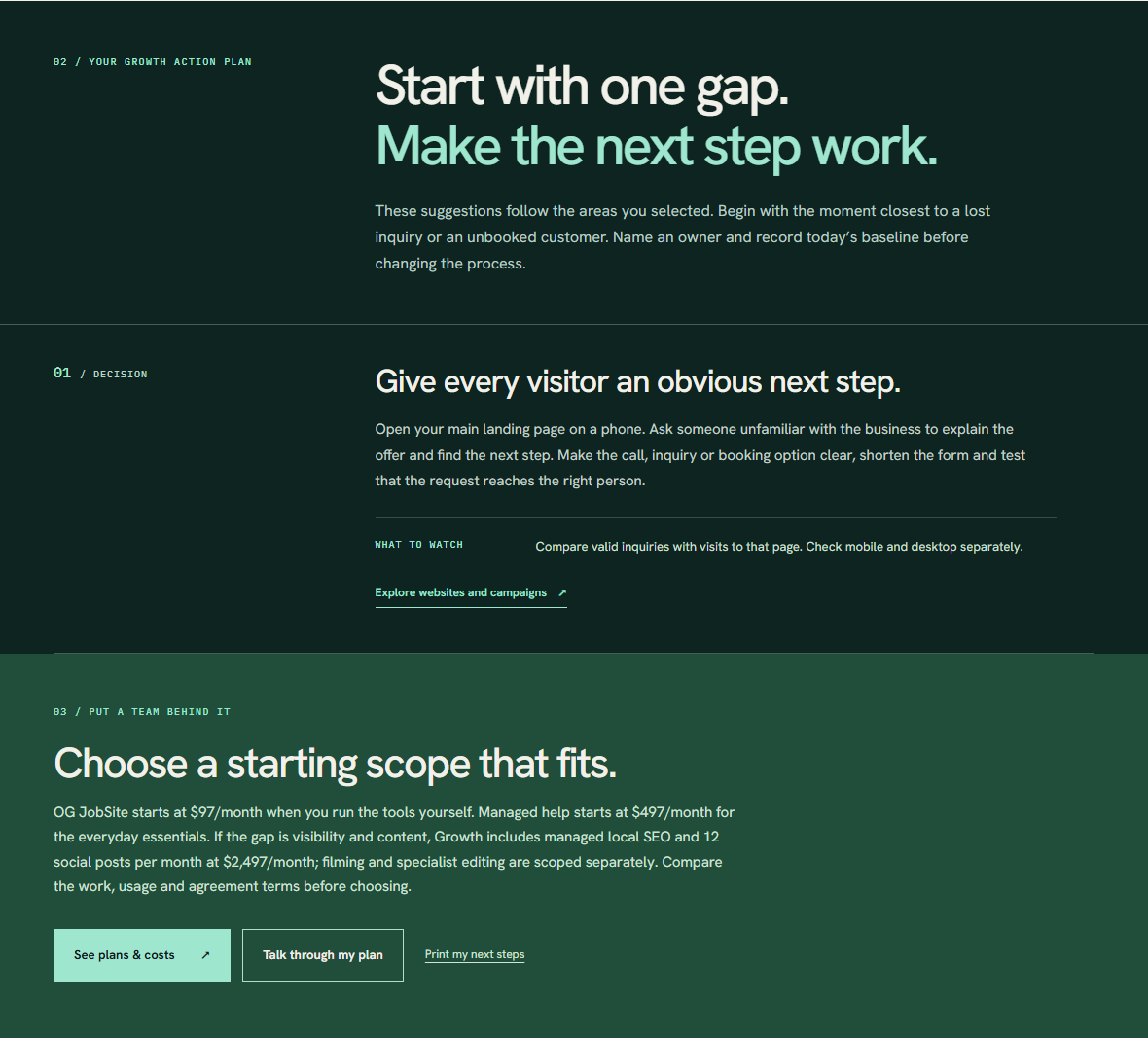 Follow the real path
Find the moment the work gets stuck
Choose a customer update, a field handoff or an internal approval. Each example shows the people, connected systems and acceptance check we would define before building.
Give them one clear view of the work.
FOLLOW THE WORK SELECT A STEP ↓
One request creates one shared record. Required details travel with it.
A test that matters: A customer can follow their own request and cannot open another customer’s record.
Where we can make a difference
Start with a customer moment or an operational bottleneck. Build the right thing around it.
A portal for requests, documents, approvals or service status. A simpler journey for customers and fewer disconnected questions for your team.
Portals · Web apps · Mobile experiencesConnect the useful systems you already have. Define who owns each record, how changes move and what happens when a connection fails.
Integrations · Data workflows · Internal toolsPut approved information and repeatable processes to work. Use rules for predictable tasks and evaluated AI where the work needs interpretation.
Assistants · Search · Process automationThe customer-facing work
For customer-facing work, trust begins with an experience people can understand and use. These public website builds show two different audiences and two deliberate paths to action.
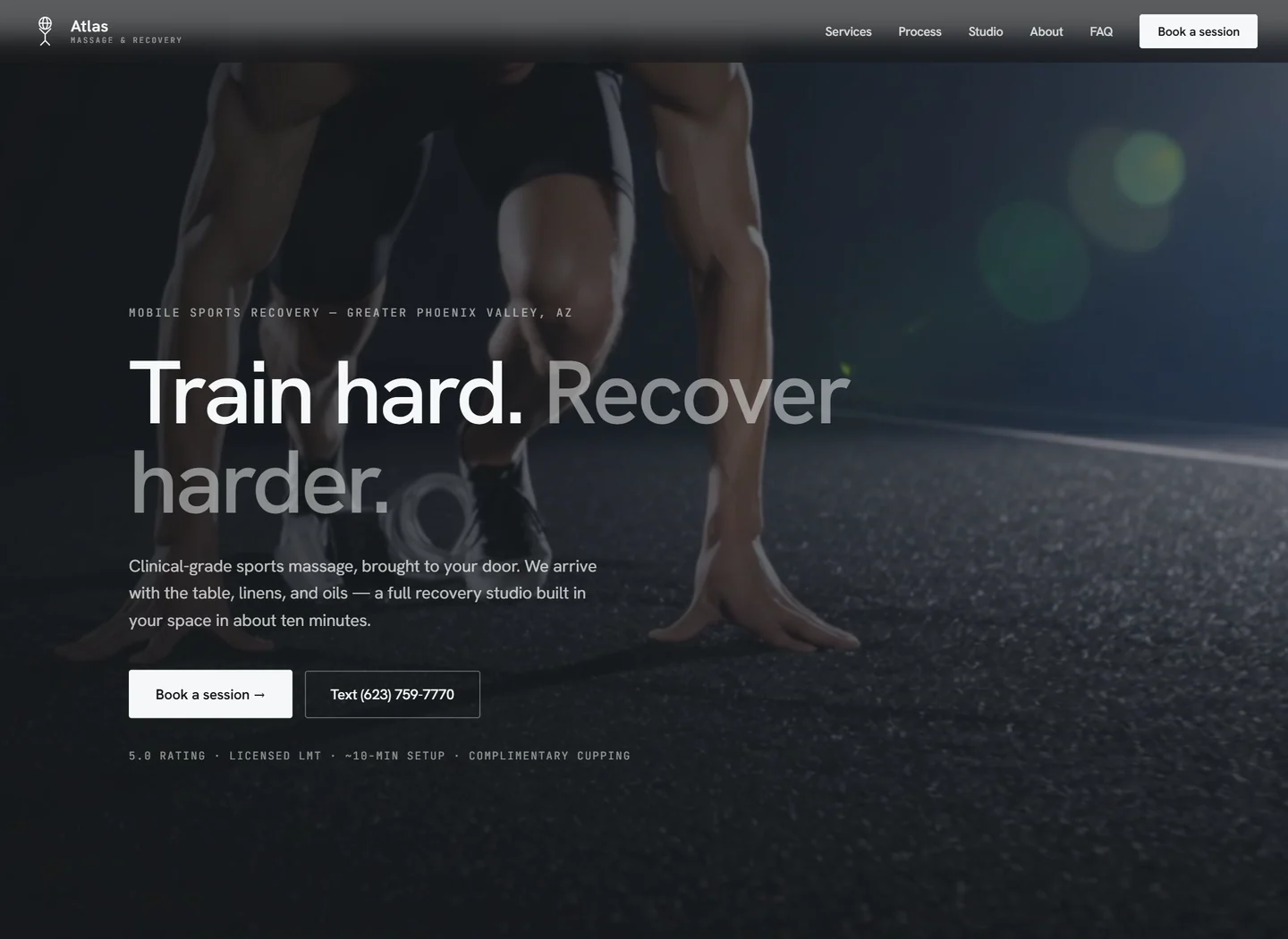
ATLAS MASSAGE & RECOVERY
Customer experience / Public website build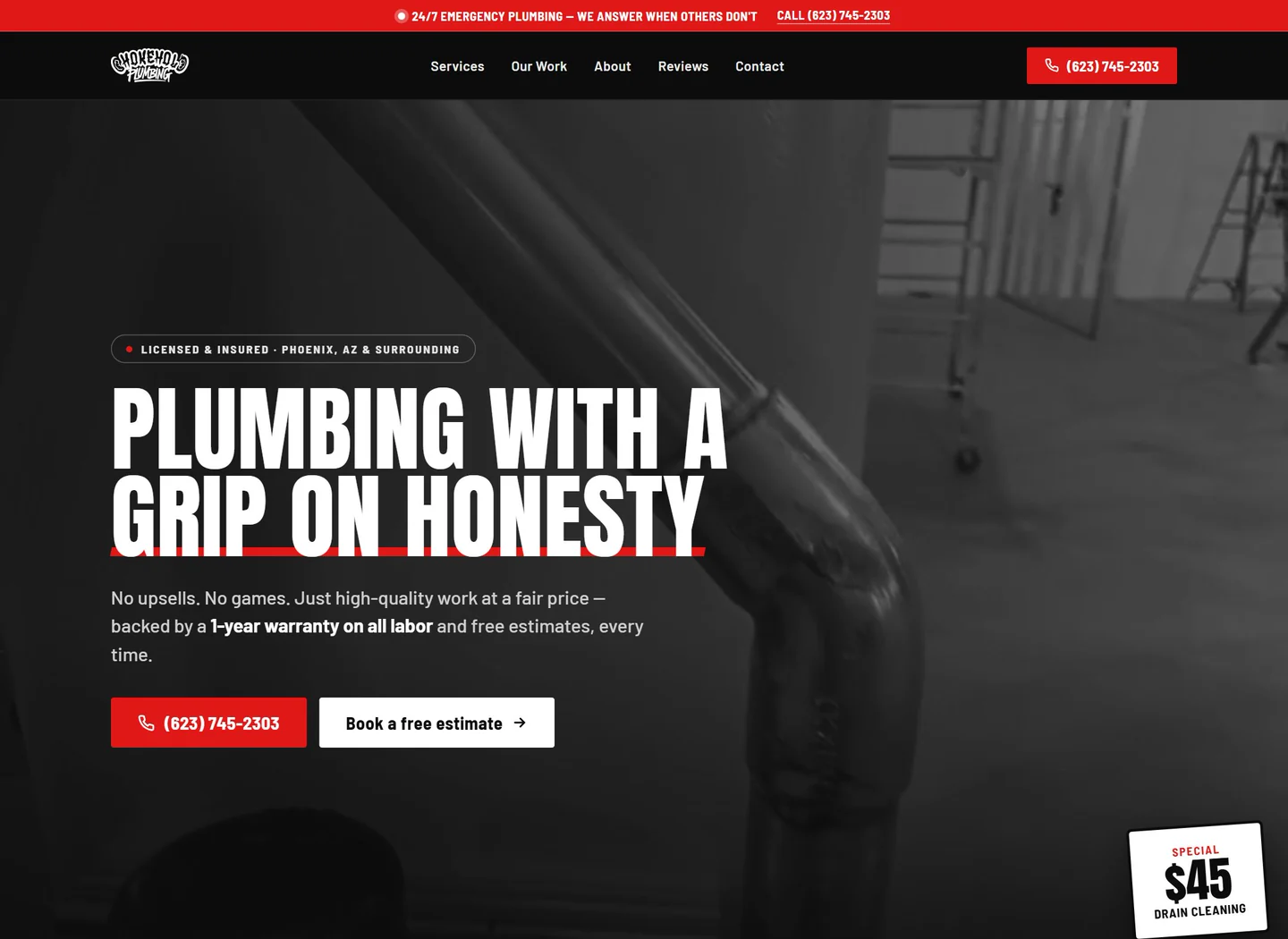
CHOKEHOLD PLUMBING
Service brand / Public website buildThe work above shows public-facing design. The interactive operations sample uses fictional data to show how a service workflow could behave. We scope actual architecture and outcomes with each client.
How the work gets delivered
We work through the decisions with you—from the first useful release to the people and systems that will run it.
Map the users, the current process and the cost of the friction. Agree on what a useful first release must change.
You get: a focused scope and a decision on what to build.Explore the key screens and interactions before building the full system. Review the difficult paths as well as the easy ones.
You get: a prototype and a shared understanding of the experience.Engineer the application, permissions and integrations. Show progress in working increments and test representative cases.
You get: working software with agreed acceptance checks.Prepare the release, documentation and handover. Agree on monitoring, maintenance and who handles an issue after launch.
You get: a system your team can use and a clear operating plan.Start with a defined investment
Custom software is quoted around the users, integrations, data and first release you need. We separate the build from hosting, third-party services and ongoing support.
Bring your process, your rough idea or the spreadsheet everyone depends on. We’ll work through what to configure, what to connect and what deserves a custom build.
Discuss the problem and budget Explore ownership, data and deliveryGood software starts with a good conversation